

An interesting month. Like so many months at peak passage times over recent years, the birds that were seen – and the birds that weren’t – were a reflection of our changing avifauna, and the habitat that we have in Bucks. Or don’t have.
Yes, I’ve returned to one of my long-running themes – we don’t get many waders any more.
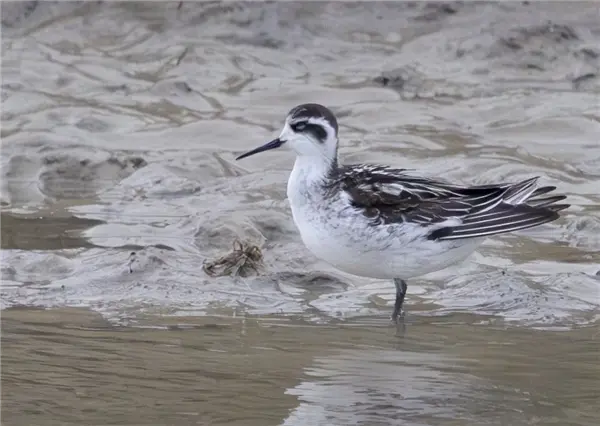
Conversely, September did include two top drawer waders. Neither was twitchable though. A juvenile Red-necked Phalarope was seen near Chetwode on 17th, having reportedly been present for a couple of days already. The bird was on a tiny farmland pond on the edge of some HS2 works, and was barely visible from a public footpath. It would be difficult to find a better example of how almost any bird can turn up anywhere.
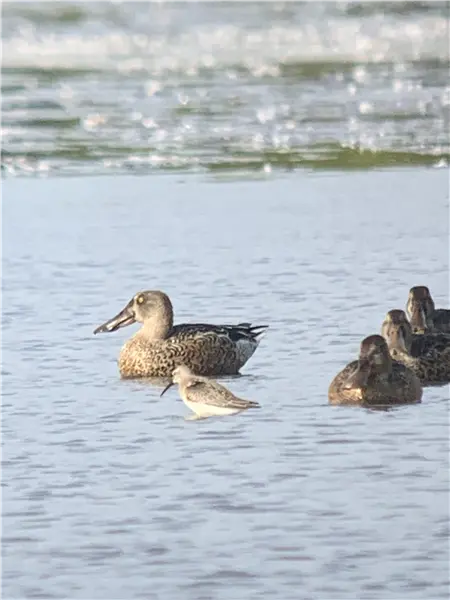
Two Curlew Sandpipers at Dorney Common on 7th were our first since 2021 (a single bird at the same site). These two records are our only ones in 10 years. This is another species which has appeared on our coasts this autumn in larger than expected numbers. If these two had stuck around for even an afternoon, they would undoubtedly have proved popular.
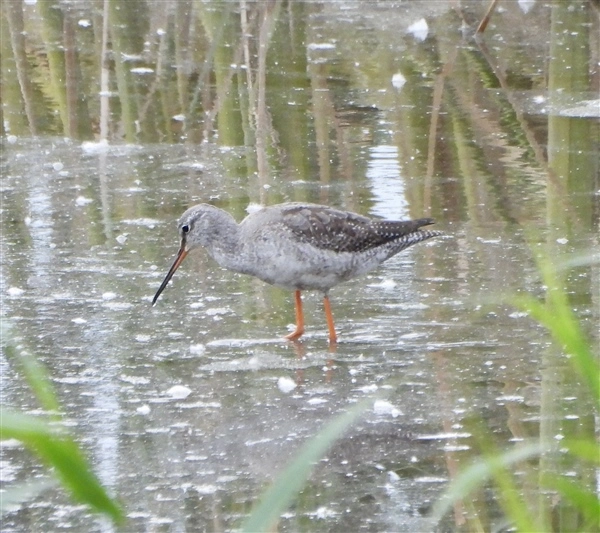
Spending much of its time tucked against muddy, reedy margins, a Spotted Redshank at Marsworth on 28th-29th was our third of the year. Pretty remarkable for a species which previously hadn’t been seen in Bucks since 2021.
A Wood Sandpiper at Willen from 1st-4th made the most of the ever-receding mud. By mid-month water levels here were pretty much back to normal and all that lovely wader habitat had vanished. The only other notable wader species were both at Dorney Common – 3 Greenshank on 9th, and a Ringed Plover from 18th-21st.
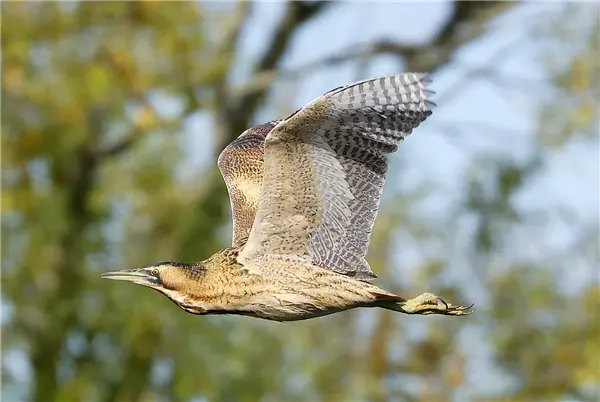
A Glossy Ibis at Amersham Flood Meadows on 27th was our first since January 2024. September saw a major nationwide influx of this species, with well over 300 individuals involved. And with long-staying birds in surrounding counties, it was inevitable that we would get one eventually. We can expect more as the winter progresses. Following sightings in August, it looks like Bitterns have settled into at least two sites – there were multiple sightings from both Calvert and Linford.
The juvenile Garganey remained at Willen until 17th. A juvenile/female Common Scoter was at Calvert on 24th. There were up to 3 Pintail at both Willen and Linford between 22nd-30th, although it’s not clear if the same individuals were responsible for all sightings. Finishing off another quiet month for wildfowl, a Red-crested Pochard was at Foxcote on 23rd.
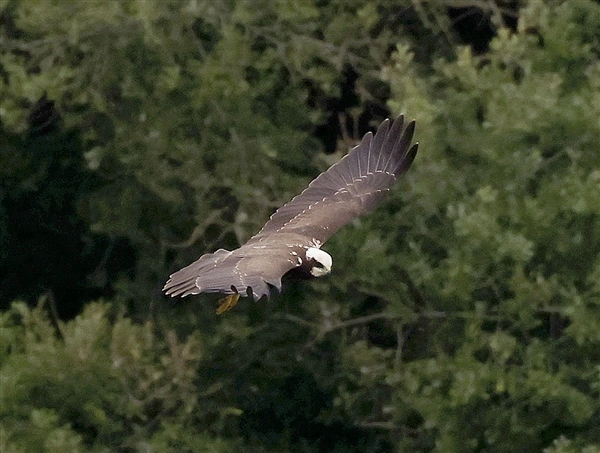
A Merlin at Ravenstone STW on 23rd was a pretty early autumn record for Bucks, and a good one for the north. Four Ospreys was an excellent return, with birds at Little Marlow GP and Drayton Beauchamp on 10th, Gayhurst on 13th, and Bourne End on 16th. A strong year for Marsh Harriers continued, with a female type at Linford on 14th and 24th, a juvenile at Foxcote on 17th-18th (the same individual that was seen here in August), and 2 juveniles over Drayton Beauchamp on 18th.
It was a less than stellar month for gulls and terns. A 1CY Mediterranean Gull at Foxcote on 10th was the only report of the month for that species. A juvenile Black Tern at Little Marlow GP on 18th and 2 Arctic Terns at Willen on 4th were the only scarce terns of the month. However, there were unusually high numbers of Common Tern still knocking about – 14 reports is above average for recent years. There were still 10 at Willen on 5th. The final reports were of singles at Caldecotte and Foxcote on 17th.
A Swift at College Lake on 12th was the last sighting of 2025, preceded by a handful of other reports. Only four Tree Pipits were seen, with singles at Great Brickhill on 5th & 14th, Lodge Hill on 15th, and Steps Hill on 20th. In contrast there were some excellent counts of Meadow Pipit, with a significant passage in the week or so following the 19th. 150 at Amersham Flood Meadows and 120 at Stokenchurch were the highest counts. But 116 over Steps Hill, 80 at Little Marlow, 75 at Gayhurst Quarry, 71 over Hyde Lane, 25 at Lodge Hill, and 20 at Pitstone Hill all contributed to an excellent month.
I’m glad to say that there were lots of Yellow Wagtails reported, although sizeable flocks were rare, with 44 at Princes Risborough and 20 at Dorney Common the largest. Remarkably, 42 Yellow Wags were ringed at Linford on the morning of 6th. Not only is this an impressive total, but at a site which historically has been rather poor for this species!
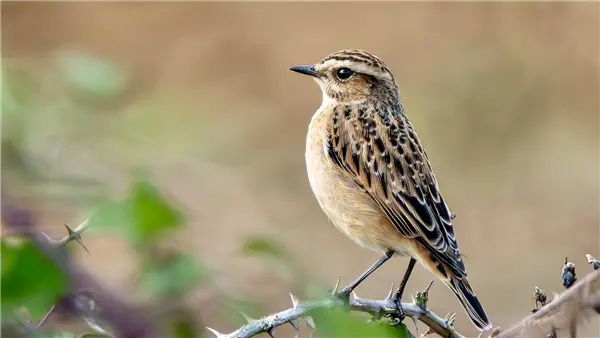
Up to 19 Wheatears were seen at 8 sites, with 3 at Stokenchurch and Wapseys Wood being the highest counts. As usual, most of these birds were in the middle and south of the county, with a single at Buckingham and 2 at Whitehouse, MK being the northern outliers. In August we had at least 45 Whinchats at 14 sites. September followed this with at least 33 birds at 15 sites. Not too shabby. Site maxima included 5 at Wapseys Wood, 4 at Gallows Bridge, and 3 at Eythrope, with 1s & 2s elsewhere. Once again, several northern sites scored success, including Hyde Lane, Ravenstone STW, and Logistica Flood. We don’t tend to get many October Whinchats, so one at Stokenchurch on 15th may well be the last of the year.
There were far fewer Redstarts than in August, but a minimum of 10 birds at 6 sites is still a respectable haul. The maximum count was 2 at Lodge Hill on 24th, the same site as the late bird on 30th.
Other passerines were indicative of the changing seasons. There was an excellent influx of Stonechats late in the month, with birds reported from 15 sites, all but one of which were in and south of the Chilterns. Peak counts included 16 at Ivinghoe Beacon, 15 at Stokenchurch, 13 at Little Marlow, 11 at Lodge Hill, and 10 at Pitstone Hill. An excellent set of records.
Single Bramblings at Long Crendon on 26th and Steps Hill on 27th were the only reports. A few Linnet flocks were seen – 150 at Buckingham, 100 at Little Marlow, and 60 at both Stokenchurch and Dorney Common. It was also nice to see a few Siskin flocks reported, with 50 at Rushmere Park, 40 at Stoke Common, and 29 over Steps Hill.
Crossbills continued to be seen in good numbers, although it’s probable that many of the early autumn birds have now dispersed – this is a highly mobile species. The Brickhills were the hotspot of the month, with peak counts of 34 at Great Brickhill, 30 at Rushmere Park, and 2 at Back Wood. Smaller numbers were seen at Prestwood, Wapseys Wood, and Stoke Common.