

The transition from late autumn into early winter was largely mild, windy, and wet. Very wet in November. A brief cold spell broke the pattern, but the mild weather is a probable explanation for our wildfowl numbers being so low. Again. We await a prolonged cold spell for an influx of any note.
That said, the two months produced an excellent run of rare and scarce county visitors, most of which were twitchable for those prepared to travel.
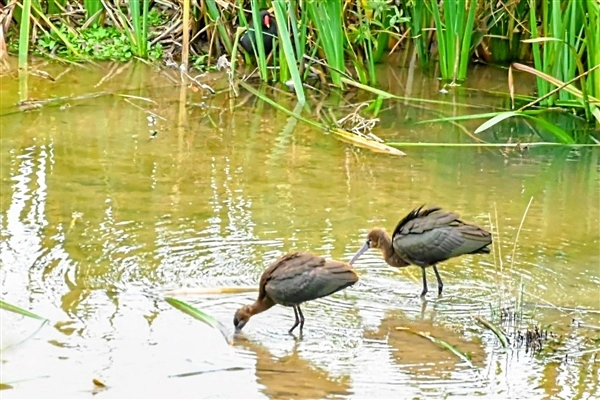
We’ll begin with the 2 juvenile Glossy Ibis at College Lake on October 26th, our second record of 2025 after the Amersham bird. The third record was a bird flying over Calvert on November 17th. With many birds remaining in southern England following the autumn influx, we can expect yet more records as the winter progresses. The only Bittern of the period was the continuing bird at Linford, which, when it showed, tended to show extremely well at the edge of the reedbed on the bund. Up to 2 Cattle Egret were at Grove from October 6th-20th, and another 4 dropped into Little Marlow GP on October 17th. Great White Egrets maintained a strong presence, being reported from 13 sites in October and 14 sites in November, with the usual concentration along the Ouse valley. Site maxima included 8 at FFNR, 7 at Gayhurst Quarry, and 5 at Linford.
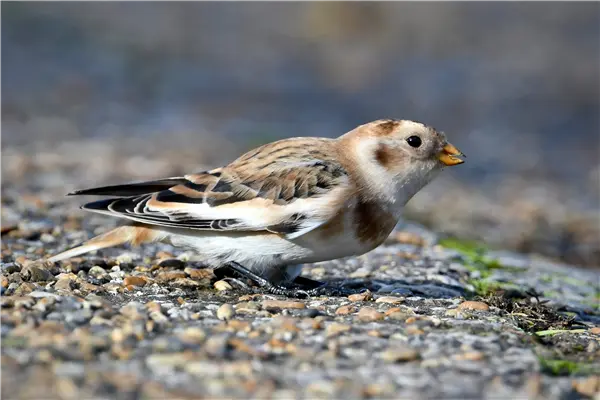
Rarer than the ibises – for us anyway – was the first-winter Snow Bunting which was found in the leafy park environs of Waddesdon Manor on October 30th. Quite different from expected locations such as a hilltop or reservoir edge. Like many Snow Buntings, it allowed for close approach and some excellent photos. This was our first Snow Bunting since a very brief bird at Gallows Bridge in 2019, and only the second since a long-stayer that flitted around the Tring reservoirs in 2011/12. The Waddesdon bird stayed until November 1st. Yellow-browed Warblers are – thankfully – pretty much annual now, so a bird at FFNR on October 26th was not unexpected. Sadly it couldn’t be re-found after its initial sighting (like several of our recent records).
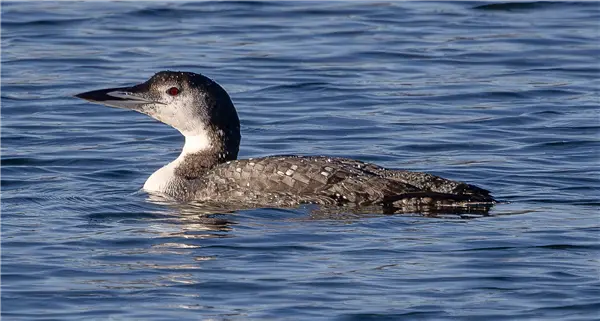
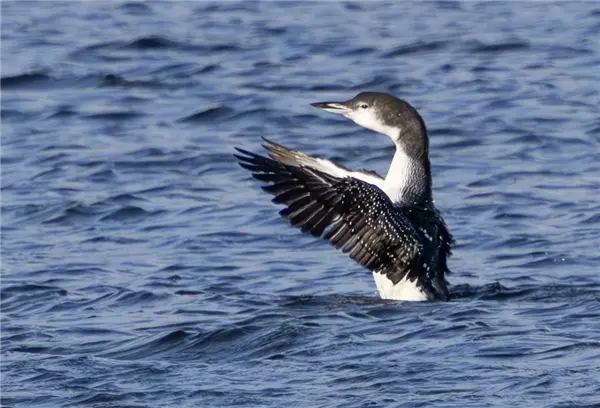
After the bunting, probably the most popular rarity of the period was the adult Great Northern Diver at Foxcote from November 20th-30th. As one of the dedicated band of Foxcote regulars, I’ve always thought the reservoir was too small to host a GND. So I was rather glad to be proved wrong. After looking sluggish on its arrival, the bird became more active over subsequent days. It usually showed very well but sometimes patience was needed, as it ranged widely across the reservoir.
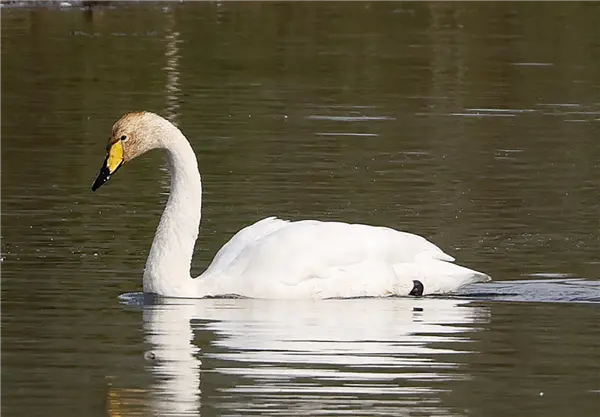
It was a good few weeks for Whooper Swans. One over Buckingham on October 9th may have been the bird which pitched up at Linford on 10th, and subsequently stayed for several weeks, with its last sighting being on November 15th. A single was at Wotton Lakes on October 13th, and a lovely family party of six were at Newport Pagnell GP on October 25th. Finally, two were at Little Marlow GP from November 23rd-28th.
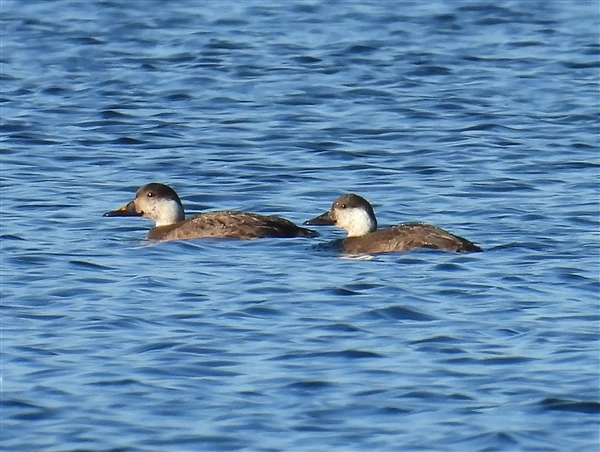
A smart male Ferruginous Duck at Little Marlow GP on November 4th was the best duck of the period. Nearly all of the fifteen Bucks records have been males. A first-winter Scaup spent almost a month at Foxcote, from October 18th-November 8th. Up to 3 Common Scoters spent a few days at Willen south, from November 16th-23rd. Our first returning Goldeneyes didn’t arrive until mid-November – a female at Foxcote on 15th became 4 by the 19th, and 3 were at Willen from the 17th. Four Red-crested Pochards were seen sporadically at Marsworth from October 18th-November 15th, and a female was at Dorney Common from November 12th-17th. The only Pintail reported was one at Linford on October 13th. An adult Brent Goose at Little Marlow GP on November 16th was the only rare goose of the period, and followed a large bad weather movement of the species off the east coast. The same weather system was also responsible for the scoters at Willen and a couple of Kittiwakes (about which more later).
Raptors can be dealt with swiftly. I’ve mentioned in previous bulletins that 2025 has been an excellent year for Marsh Harriers in Bucks. Continuing that trend, the juvenile remained at Foxcote, being seen on October 1st & November 6th. A juvenile male was also seen there on October 20th. A female lingered in the Ouse valley, being seen at FFNR on October 20th, and Linford between November 15th-26th. A Merlin at Marlow Bottom on October 25th was just the second one of the autumn. A Goshawk at a south Bucks site on October 11th is at the time of writing the only one reported in Bucks this year.
October saw the final flutterings of autumn wader passage. The Spotted Redshank at Marsworth was seen on 1st. A Ruff was at Dorney Common on 6th and a Curlew flew over Calvert on 27th. A Black-tailed Godwit dropped into College Lake on 18th, and a Ringed Plover over Waddesdon Manor on 2nd was an unusual record. November saw another Ringed Plover, over Calvert on 19th. A Common Sandpiper at Dorney Common on 4th may be last year’s over-wintering bird returning. A Jack Snipe showed nicely in the cut reeds at Calvert from November 2nd-5th. A Dunlin flew over Furzton Lake on 22nd.
As expected, Lapwings and Golden Plovers started to gather in those flocks that provide us with much enjoyment over the winter. October numbers were modest, with only Lapwings of note – 350 at Ickford and 180 at Calvert. November brought a better return, with 800 at Gallows Bridge, 500 at Edgcott, 300 at Tove Valley, and 160 at Willen. Golden Plovers were headed by a spectacular flock of 1000 at Gallows Bridge; 163 at Mursley and 140 at Marlow Bottom were the only other big flocks.
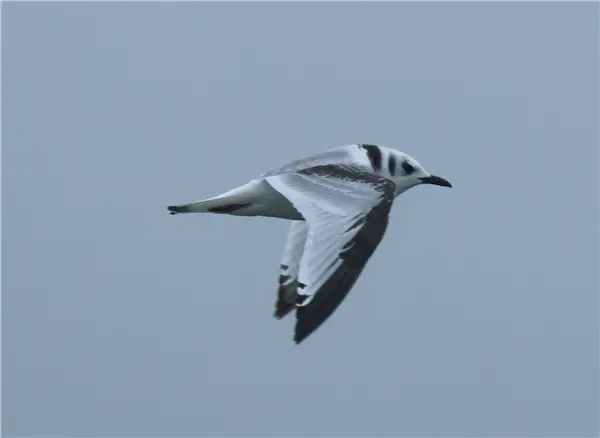
Four Sandwich Terns through Rowsham on October 13th were the definition of a bolt-from-the-blue. The bad weather in mid-October I mentioned earlier was also responsible for the appearance of two Kittiwakes on 16th, a first-winter at Foxcote and an adult at Little Marlow GP. Just as unusual was a first-winter Little Gull at Calvert on November 25th. An adult Mediterranean Gull at Little Marlow GP on October 26th was the only one of that month. There were a few more in November though, with a first-winter at Pitstone Hill on 9th, 2 (adult & first-winter) at College Lake on 15th, and an adult at Amersham Flood Meadows on 17th. Calvert was once again the stronghold for both Caspian and Yellow-legged Gulls, the roost there resulting in a good run of records throughout November, with maxima of 4 Caspian Gull and 10 Yellow-legged Gull. Both species were much scarcer elsewhere, with just three other reports of Caspian and one of Yellow-legged.
After confidently asserting last month that a Swift at College Lake was the last one of the year, a bird at Lee Common on November 6th proved me wrong. Late swift species should always be checked for Pallid, but this one proved to be a Common. An excellent record nevertheless. The only Short-eared Owl reported was one at Gallows Bridge on November 13th. With just three reports, 2025 has been very below par for this perennial favourite.
Woodpigeon is a species which hardly ever makes it into these reports, but a strong vis-mig season – in keeping with many migration watchpoints across the UK – is worth talking about. Woodpigeon tend to move late in the year and migrating flocks can easily be spotted flying high, fast, and direct, usually well above the flightlines of local birds. October saw totals of 4210 over Steps Hill, 1879 over Great Brickhill, 1202 over Rowsham, 960 over Wapseys Wood, and 816 over Tattenhoe Park. The good counts continued into early November, with 4765 over Steps Hill, 2023 over Rowsham, and 1000 over Great Brickhill.
There was a lot of passerine action to report on during the period. A female Bearded Tit at Calvert on November 2nd was our first for five years. Over the last ten years or so, Calvert has offered the best chance of seeing this species, although even when birds are present they can be very elusive. We probably should get more records of this species than we actually do, so it’s always worth scrutinising your local reedbed on a winter walk.
Two Woodlarks were seen in October, at Steps Hill on 18th and Salden on 25th. Two migrant Woodlarks is a decent return but two migrant Ring Ouzels is a very poor return, with birds at Great Brickhill on October 14th and Steps Hill on 17th the only reward for vis-miggers and patch watchers. Hawfinch used to be a devilish hard bird to see in Bucks, but over recent years it’s become a touch more numerous, especially in autumn. Passage this year though was modest, with birds being seen at Steps Hill (max 3), Buckingham (2), and Marlow Bottom (1) in October. And November saw just two reports, of 5 at Steps Hill on 16th and 1 at Great Brickhill on 24th.
Several late summer migrants hung around into October. Yellow Wagtails were at Dorney Common on 5th & 22nd, and Buckingham on 11th. A Whinchat was at Amersham Flood Meadows from 1st-4th. And a Redstart was at Lodge Hill on 2nd & 11th.
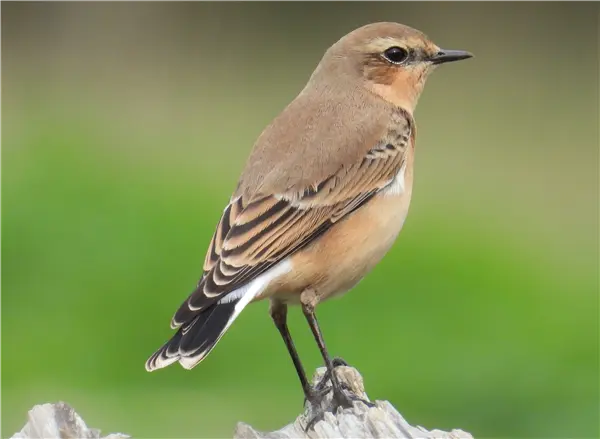
There were also plenty of Wheatears, for October anyway. Rowsham held 1 on 4th and 2 on 18th-19th; singles were at Buckingham on 5th, Dorney Lake on 7th, and Ravenstone STW on 10th; 2 were at Lodge Hill on 13th; the final birds of the year were singles at Ivinghoe Beacon on 22nd and Chisbridge Lane on 25th. Following a strong September, Stonechats were reported from a whopping 33 sites in October, with site maxima including 15 at Lodge Hill, 11 at Pitstone Hill, 9 at Amersham Flood Meadows, and 5 at Stoke Common. There were fewer reported in November, from 19 sites, with maxima including 7 at Dorney Lake and 6 at Eythrope. September’s significant Meadow Pipit passage nudged into October, with 379 over Steps Hill on 6th supplemented by 75 at Wapsey Wood on 9th and 66 at Gallows Bridge on 4th. And flocks of 10-20 birds were seen at many locations during the rest of the month. By November though the tap had been turned off, with 65 at Eythrope on 2nd being the only significant flock.
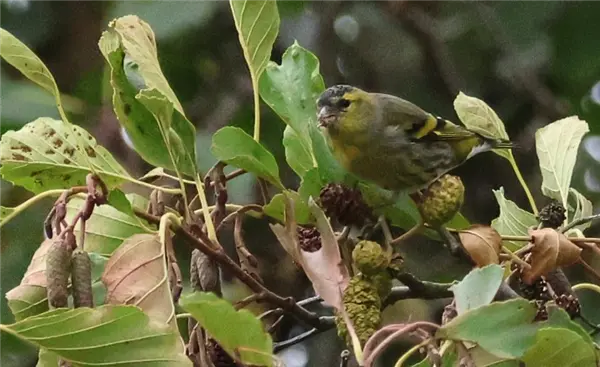
There were still lots of Crossbills around. Most reports came from October, but the highest counts came from November. Most birds were in the south of the county, with just the Brickhills and Leckhampstead Wood representing the north. Max counts were 50 at Great Brickhill and Black Park, 45 at Rushmere Park, and 42 over Steps Hill. There were also lots of Siskin about, which is an encouraging sign for the coming winter. Site maxima included 73 at Great Brickhill, 70 at College Lake, and 50 at Great Hampden, with many other smaller flocks scattered across the county. Redpoll have been hard to come by in recent winters, so flocks of 45 at Great Missenden, 40 at Padbury, and 30 at Little Marlow were notable.
Brambling numbers picked up, as expected. In October 49 over Steps Hill was the biggest count, with plenty of smaller counts elsewhere. 76 over Steps Hill was the biggest November count. There were a few decent flocks of Chaffinch seen, with 335 over Steps Hill, 200 at The Hale, and 108 at Tattenhoe Park in October; followed by 177 over Steps Hill and 130 at Rowsham in November.
The only sizeable Yellowhammer flock was 75 at Rowsham in October, with a mere 25 at Tove valley in November being the biggest count of that month. Like many farmland species Yellowhammers are in trouble, but we surely have a few three-figure flocks hiding out there somewhere. As usual there were far fewer Reed Buntings seen, with max. counts of 10 at Hyde Lane & Tove valley supplemented by scattered ones and twos elsewhere.
Modest numbers of Starlings were seen at a few vis-mig sites in October, but November did see some more substantial numbers, with 6000 at Gallows Bridge, 5000 at Ayesbury STW, 1000 at Waddesdon, 900 at Dorney Common, and 500 at Berryfields.