
January
After a very busy end to 2025, the new year started in the same vein of form, with the continuing cold spell from late last year forcing more of our winter migrants to take refuge within the county. This continued the theme from the second half of December, leading to an action-packed start to 2026.
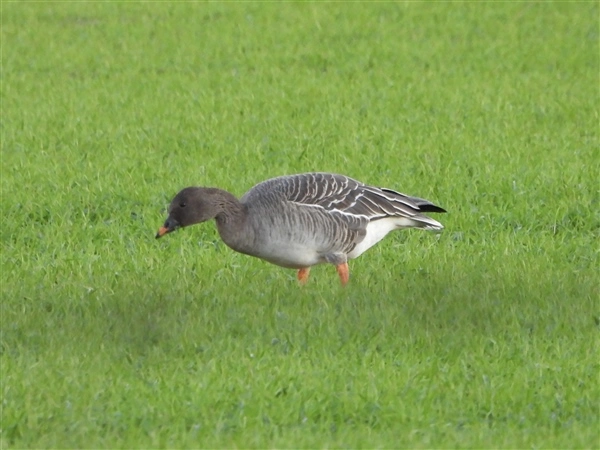
Probably the two most notable records of the month related to Tundra Bean Geese. A single, first found over Christmas, accompanied a flock of mostly Greylags - and 11 White-fronts - at Langley. Although it spent much of its time in Berks, the Beanie did the right thing and crossed the border several times from 3rd to 6th. There were also a group of five spotted crossing the county boundary at Marsworth on 10th.
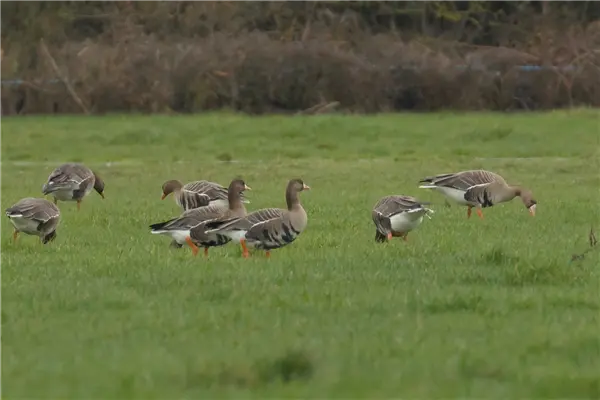
The White-fronted Geese invasion from late last year showed no signs of abating. All records are included below:
- Gayhurst Quarry: 8 (2 ad + 6 juvs) on 1st – 3rd
- Dorney Reach: 5 on 1st
- Richings Park: 11 crossed the border into Bucks on several dates between 3rd – 8th
- Marsworth: 2 on 7th and 10th
- Linford: a group of 7 individuals, first noted on 7th grew to 9 two days later and continued until the end of the month.
- Eythrope: a single first reported on 14th was quickly joined by two others 4 days later – making up a group of 2 ad + 1 juv
- Dorney Lake: a first winter bird on 20th
- Gallows Bridge: 3 on 25th
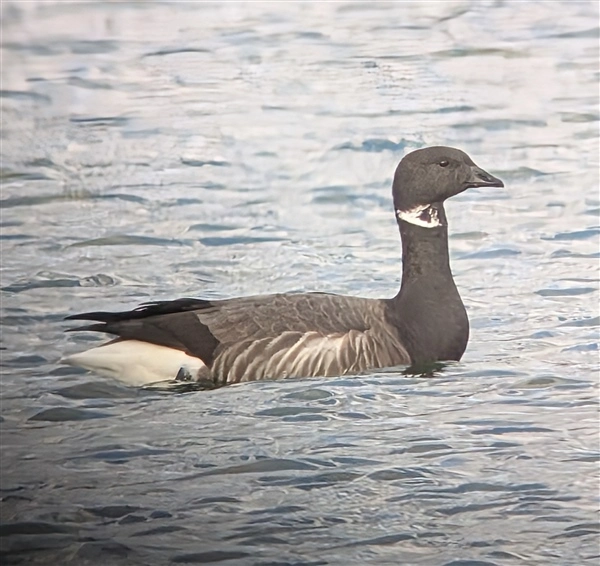
An adult dark-bellied Brent Goose was found at Little Marlow GP in the early afternoon of 20th but left soon after. However, it obviously decided Little Marlow was to its liking and had returned by dusk later that same day. Unfortunately, there was to be no sign of it thereafter.
Following on from last month’s reports from Furzton Lake and Tattenhoe, a Siberian Chiffchaff was found at Ravenstone STW on 12th.
Meanwhile, Bitterns were recorded on three separate dates at Calvert. A flock of Cattle Egrets were present in the Ickford/Shabbington area from 24th until the end of the month, with numbers peaking at 7 on several dates. This species is gradually becoming more resident in Bucks. Great White Egrets were recorded at 17 sites with 6 at FFNR being the peak tally.
Pintails were recorded at six sites:
- Willen: a female from 1st until the month’s end
- Calvert: a pair on 2nd
- Linford: a male on 12th
- Little Marlow GP: a male was found on 14th
- Foxcote: a pair on 19th
- Shabbington: 2 males + a female on 25th – 26th
There was a group of Red-crested Pochards at College Lake from throughout the month, peaking at 12 on 20th. Goosanders were at 16 sites, with 11 at each of Tongwell, Passenham Quarry, and Emberton being the highest counts. The usual Pochard x Tufted Duck hybrid was at Little Marlow from 1st – 13th.
Marsh Harriers were seen over Gallows Bridge (1), Linford (2 – involving a male and a female), Buckingham (1) and Floodplain Forest (2). Could a breeding attempt be on the cards this year? A Goshawk was spotted over a South Bucks site on 12th. There was just a single Merlin reported, at Whitchurch on 4th.
Oystercatchers were at Little Marlow on 28th and Linford on 30th, very early dates for this species. Last month’s Ringed Plover continued to be seen at the HS2 works at Eythrope with a sighting on 15th – this is the first record of this species overwintering in the county.
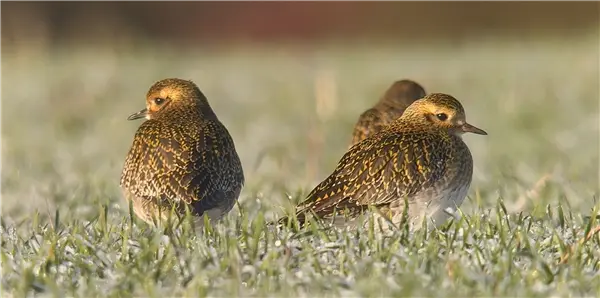
There were very few records of Golden Plovers, being reported from just six sites – 80 (the peak total for this species) came from Chisbridge Lane. Very meagre indeed! Meanwhile, Lapwings fared better, the biggest flocks being 2500 at Ickford, 1200 at Little Marlow, 1000 at Gallows Bridge, and 800 at Shabbington respectively. Much better compared to last year. Early Dunlins were at Eythrope on 18th and Shabbington on 30th.
Jack Snipes were at Amersham (3), Gallows Bridge (2), College Lake (1), Stoke Common (1) and Bury Field, Newport Pagnell (1). The highest Snipe tallies came from Gallows Bridge (42), Aylesbury STW (18) and Amersham (15). Very low numbers - just like the past few winters. Woodcock were found at 12 sites – a peak count of 5 coming from Little Linford Wood. The overwintering Common Sandpiper continued to be seen at Dorney Common with a sighting on 14th.
The biggest Black-headed Gull flock came from Little Marlow GP (2000). Just about average, but still on the low side. Mediterranean Gulls were reported from just Little Marlow GP (an adult on 2nd & a 2nd-winter on 11th), and Dorney Common (a 2nd-winter on 3rd & an adult on 29th). This species has certainly been hard to catch up this winter. A peak total of 3000 Common Gulls was reported from Little Marlow GP – an excellent count.
Calvert (7), Furzton Lake (1), and Little Marlow (2) all hosted Yellow-legged Gulls. Whilst Little Marlow GP (4), Furzton (1), Calvert (2), Willen (1), Springfield Farm Landfill (1), Tongwell (1), and Floodplain Forest NR (1) all logged Caspian Gulls. The highest tally of Great Black-backed Gulls (65) came from the Willen gull roost, which was notable - even decent double-figure flocks are a rarity nowadays.
A maximum of 3500 Starlings were at Rowsham, with 1000 at Linford and 700 at Tove Valley the next best totals. The peak count of Meadow Pipits came from Gallows Bridge (50). Stonechats were at 24 sites with Amersham (6), Lude Farm (4), Dorney Lake (4), and Whaddon (4) all recording high totals.
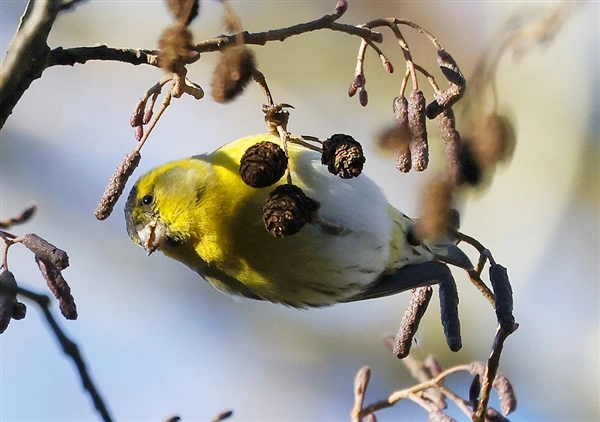
There were only eight records of Brambling submitted, with birds reported from just seven sites. Unsurprisingly, the biggest numbers came from Penn Wood – a massive count of 162. The Rushmere Park/Great Brickhill area hosted a gargantuan flock of 350 Siskins - the largest for a few years.
There were several large flocks of Linnets, at Iver (500), Buckingham (350), Oakhill Wood (310) and Weston Underwood (300). The biggest Redpoll flock of the month was 76 at FFNR, and there were another five flocks of 25+ birds reported. Not bad for a species which winters with us in fluctuating numbers.
Crossbills were found at 11 sites with Rushmere Park (18), Dorney Wood (20), Buttermilk Wood (30), Bow Brickhill Wood (40), Great Beards Wood (55) and Whiteleaf (57) all recording double-figure flocks. Let’s hope some stay around to breed. Only Tove Valley (15) and Amersham (20) held double figure counts of Yellowhammer – low numbers yet again. The peak Reed Bunting total was 35 at Tove Valley. 10 Corn Buntings at Lodge Hill was the only double-figure count for that species.
February
We now move into February, which was another solid month – nothing too spectacular but plenty to enjoy.
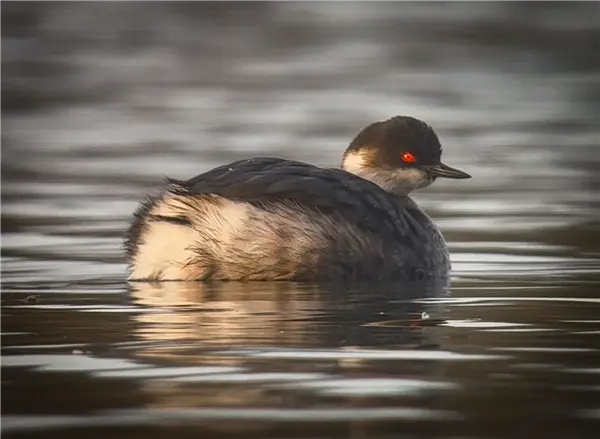
It was a good month for rare grebes. A mobile Slavonian Grebe occasionally gave birders the runaround at College Lake from 5th-10th. The first in the county since a bird at Furzton in December 2021. And a Black-necked Grebe popped up at Little Marlow GP from 27th-28th.
Glossy Ibises have been loitering in surrounding counties for most of the winter. Our comparative absence of records is perhaps a reflection of lack of suitable habitat. This is one species which has very quickly morphed from super-rare to practically expected every year now. One seen at Olney on 13th wasn’t re-found, but it probably won’t be our last of 2026.
A female Bearded Tit was seen at Calvert on 2nd but not subsequently. It’s entirely possible that individuals put in extended stays here, but they can be very elusive.
Bitterns were occasionally seen at traditional roost sites of Calvert and Marsworth, but the individual at Linford hasn’t been seen for many weeks now. The flooded paddocks at Shabbington were the place to catch up with Cattle Egrets, with a maximum of 9 on 23rd-24th. Late winter brings peak numbers of Great White Egret, and birds seen at 17 sites in February reflects that, with maximum counts of 8 at Linford and 6 at Shabbington.
The winter of 2025/26 will long be remembered for its influx of geese, and although we haven’t had that many Pink-feet or Bean Geese, we continued to enjoy our fair share of White-fronts. A new flock of up to 43 were at Ivinghoe Aston from 6th-24th. A flock of 81 birds at Gallows Bridge on 15th may have popped over from Otmoor RSPB (where there’s been 160+ since the new year). Up to 8 returned to Linford in the last week of February, 15 were at Ickford on 26th, and there were 4 at Fleet Marston on 13th, 5 at Aylesbury STW on 16th, and 5 at Broughton on 26th.
Smews are now sadly very rare in Bucks, so although a redhead at Marsworth on 8th which drifted into Bucks airspace felt like an unsatisfactory steal, it still constituted a notable record.
Pintails were seen at six sites, although in small numbers, with 5 at both Little Marlow GP & Linford being the peak counts. Willen provided the largest Goldeneye count – 19 on 2nd and 21st. The only other sites to host this smart duck were Foxcote and College Lake. Goosanders were seen at a healthy 14 sites, most in the north as usual. Peak counts came from Emerton (14), FFNR (13), and Foxcote (6). Away from the north, birds at Little Marlow GP, Cliveden, and Ickford were notable. There were Red-crested Pochards at Little Marlow GP (a pair on 15th), Weston Turville (a pair on 10th), and College Lake (a male on 7th).
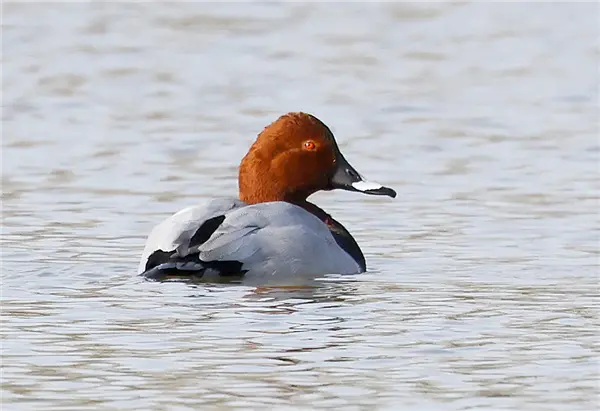
I don’t usually include counts of the commoner wildfowl species in these reports, but given the decline in wintering numbers in both Bucks and the UK as a whole, it was nice to see these counts, which by Bucks standards are pretty decent: 1791 Teal at Gallows Bridge (outrageous!), 59 Shoveler at College Lake, 162 Pochard at Willen, and 376 Tufted Duck also at Willen.
Marsh Harrier sightings have dropped off significantly since January, with just a handful of sightings along the Ouse valley. Additional birds were seen at Gallows Bridge (up to 2) and Turville.
February sees the return of one our most charismatic breeders – Curlews. And right on cue there were 4 at Ickford on 26th, and 2 at Gallows Bridge on 27th. An additional bird at Dorney Common on 22nd will have been a migrant. Two Ringed Plovers at Logistica Flood on 23rd will hopefully be the start of passage at what currently constitutes Milton Keynes’ only decent wader habitat. Single Dunlins were at Shabbington on 14th, Dorney Common on 19th, and Rowsham on 20th.
There were only two reports of Jack Snipe – one at Gallows Bridge on 8th and 4 at Stoke Common on 18th. Snipe were widely distributed, but numbers were rather low. The peak count was 51 at Gallows Bridge, and there were also 33 at Aylesbury STW, 14 at Stoke Common, and 13 at College Lake.
Another species present in lower than usual numbers was Golden Plover. The floods at Shabbington-on-Sea held the largest flock (210), and there were also 160 at Hulcott and 100 at Fleet Marston. By far the largest Lapwing flock was 6500 at Shabbington, and it’s a pleasure to report other four-figure flocks, namely 1690 at Gallows Bridge, 1600 at Rowsham, and 1000 at Hulcott. Those mammoth flocks were absent from the north, where 620 at Newport Pagnell was the highest count.
A 2CY Little Gull was at Little Marlow from 27th-28th. An adult Mediterranean Gull was seen at Dorney Common on several dates, and adults at Little Marlow GP on 27th & 28th were thought to be different individuals. Reflecting a pattern of recent years, Herring Gulls and Lesser Black-backed Gulls were notable for their relative scarcity. The only three-figure counts of Lesser Black-backs came from Shabbington and Leckhampstead Wharf. The largest Herring Gull count was a paltry 22 at Furzton.
There were only eight reports of Great Black-backed Gull in February, with a max. of 22 at Little Marlow GP. This beast of a gull is now a scarce winter visitor to Bucks and within 10 years could conceivably become a description species. Eight Caspian Gulls at Shabbington on 11th was an impressive count, backed up by 3 at Leckhampstead Wharf on 8th, and singles at Little Marlow GP and Ickford.
A Short-eared Owl at Fleet Martson on 10th confirmed a possible report from the same site in January.
February is the ideal time to start looking for Lesser Spotted Woodpeckers, so it was good to see reports of a pair at a traditional site in the Burnham Beeches complex. Hopefully March will see more reports from more sites. Yes they’re a scarce bird, but we absolutely host more than one breeding pair!
Thanks to everyone who has responded to Mike’s appeal for Song Thrush and House Sparrow sightings. Song Thrushes were reported from 46 sites, with plenty of glorious singing heard. Notable counts were 8 at Backwood, and 6 at each of Hyde Lane, Tattenhoe, Linford, and Newton Longville. House Sparrows were seen at 17 sites (we surely have more than this!) with counts of 22 at Rowsham and 14 at North Wingrave being the largest.
There were a few decent flocks of Skylark, namely 70 at Horsenden, 48 at Little Linford Wood, and 45 at Tove Valley. The only notable flock of Meadow Pipit was 23 at Horsenden, which is a little disappointing, but we can expect an uptick in numbers in March when their return passage north begins.
Only six reports of Brambling is an indication of just how scarce this species has been this winter. But one of those reports was of an impressive 136 at Penn Wood. The numbers at this traditional roost site have fluctuated wildly over the last few years, but this count (backing up a similar one from January) was more like the old days. It was good to see several large Chaffinch flocks reported in February, namely 250 at Baldwin’s Wood, 210 at Horsenden, 200 at Chalfont St Giles, and 120 at Saunderton. The largest count from the north was 28 at Tattenhoe.
There were loads of Siskins about, with the largest flocks being 100 at both Dorney Lake and Rushmere Park, plus 50 at Fairford Leys, 40 at Little Marlow GP, Linford, and College Lake. As usual Redpolls were present in much smaller numbers, but they were widely distributed in February. The biggest flocks were 50 at Rushmere Park and 22 at Church Wood.
Crossbill numbers finally seem to be dropping off, and although birds were seen at nine sites, the largest flock was 18, at Rushmere Park. A couple of Linnet flocks were notable – 500 at Baldwin’s Wood and 221 at Whaddon. There were 100 Yellowhammers at Horsenden and 45 at Ravenstone Mill. The largest Reed Bunting count was 25 at Tove Valley.
We’ll finish with Starlings, and a hefty flock of 10,000 birds at Wing on 2nd, supplemented by 2000 at Rowsham and 900 at Foxcote.