Some Decembers in the county can feel long and quiet – a month to concentrate on the festive season and put birding on the back burner. This December was heading in the same direction until the final week, when cold easterlies arrived - more on the effects of those easterlies later.
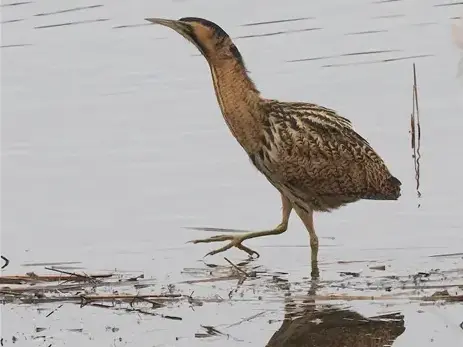
A Bittern continued to be seen at Calvert with sightings on multiple dates between 23rd-30th. The Linford bird seems to have departed though. Great White Egrets were recorded at 15 sites with 9 at Linford being the biggest count. A Cattle Egret was found in the Bucks section of Marsworth Res on 21st and 4 were at Shabbington on 29th.
Kicking off this month’s bird report is the adult Great Northern Diver at Foxcote, which spent a total of 13 days at the site. First found in the second half of November, it remained until the morning of 3rd, when it swam off into fog never to be seen again.
As mentioned previously, easterly winds during the last week of December brought with them many cold weather migrants, leading to much frantic searching up and down the county and the following records.
One observer got a late Christmas present when 6 Bewick’s Swans flew over Furzton Lake on Boxing Day – a very rare sight indeed these days. Whooper Swans were seen at Lavendon (2 on 21st) and Calvert (1 on 28th).
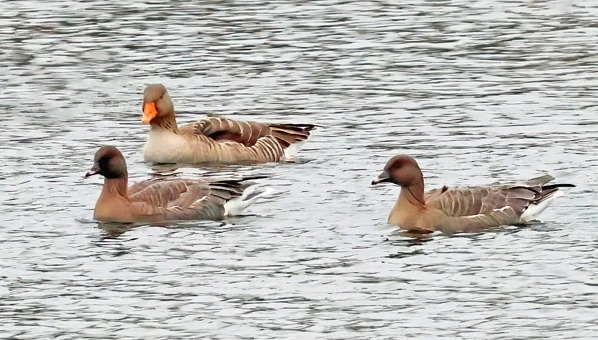
Two days later, on the 30th, 4 Tundra Bean Geese also turned up at Calvert. These birds were bookended by a pair of records from College Lake: a family group (4ads + 1juv) flew through on 26th and ended up just across the county boundary at Marsworth, and a single made a quick visit on New Year’s Eve. These were the first Bucks records since 2017. Two Pink-footed Geese at Calvert from 28th-29th shouldn’t be lightly dismissed either – genuinely wild birds are rarer in Bucks than White-fronts.
There was a plethora of White-fronted Geese sightings. They were as follows:
- Aylesbury STW: a single passing through on 24th and 26th.
- Lathbury/Linford: 15 flew over Lathbury, before making a pit stop at Linford on 24th. 7 birds were seen at Linford on 29th.
- Gallows Bridge: a flock first seen on Christmas Eve had grown to 74 by Boxing Day, before being last noted on 27th.
- Dorney Reach/Jubilee River: 4 (3ad + 1juv) were feeding in an adjacent wheat field on Christmas Day. Another juvenile had joined them by 28th. All five birds remained until the year’s end.
- Buckingham: 2 flew over on Boxing Day.
- Gayhurst Quarry: 13 birds were first noted on 27th. This flock had grown to 19 by the year’s end.
- Ickford: at least 3 passed over on 29th.
- Nether Winchendon: 14 were sween flying towards Aylesbury on 30th.
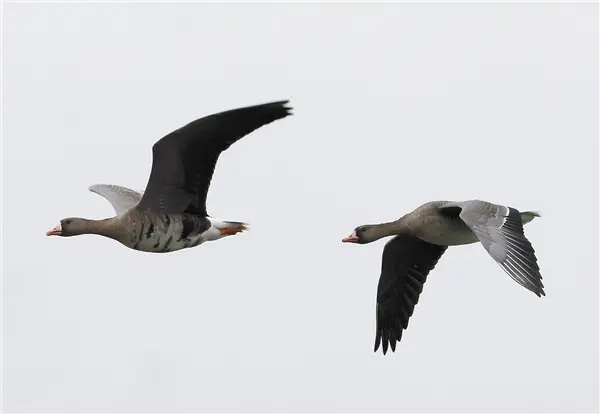
It’s worth mentioning how remarkable the late-year influx of wildfowl actually was. Geese and swans were turning up almost anywhere in England, with a bias towards southern and eastern England. Looking at Birdguides on some days it seemed that a wild goose of some sort was hitching on to every feral flock around. Numbers nationwide were very difficult to accurately estimate, given how mobile some birds were, but conservative counts start at 2500+ White-fronts, with Tundra Bean Geese were seen at 140+ sites in the last week of the year. Amazing stuff.
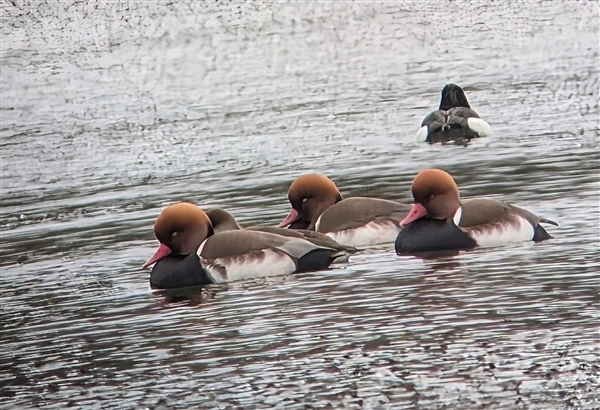
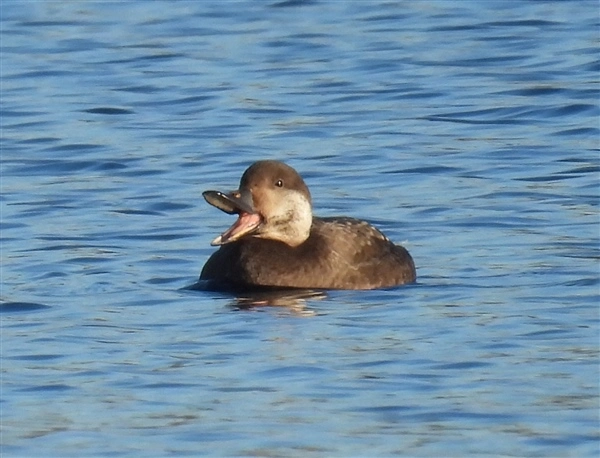
Pintails were seen at Stowe (2 on 27th) and Willen (1 on 30th), and 4 Red-crested Pochards were at Little Marlow GP on Boxing Day. A first-winter male Common Scoter was at Calvert from Boxing Day to the month’s end.
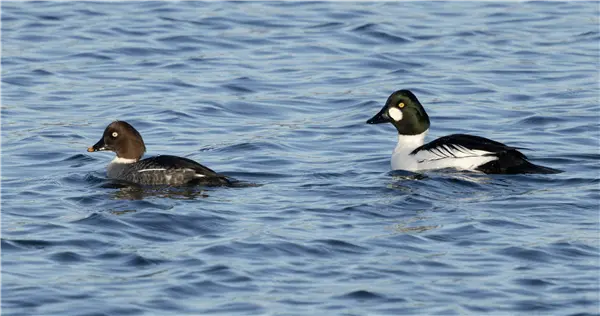
Goldeneye were reported from just 3 sites with the highest count being 20 at Willen and a max of 6 at both Foxcote and College Lake. This showing maintains the theme of recent winters - this delightful duck is no longer widespread in Bucks in winter. Meanwhile, Goosander fared slightly better with birds reported from 11 sites - the highest count was 12 at Tongwell.
There was a gargantuan flock of 1300 Golden Plovers at Gallows Bridge, with the next best count being a rather smaller 81 at Broughton, MK and sightings from just another five sites. Let’s hope numbers pick up later in the season!
The largest Lapwing flocks recorded were 1000 at Gallows Bridge, 390 at Tove Valley, 300 at Hulcott, 263 at Willen, and 210 at Little Marlow GP. As well as these, there were several other three-figure counts.
A nocturnal Curlew passed over Tattenhoe on the evening of 27th and a Ringed Plover was located at the HS2 works at Waddesdon and Calvert on several dates between 1st-11th. Remarkably, this bird actually seems to be over-wintering in our county.
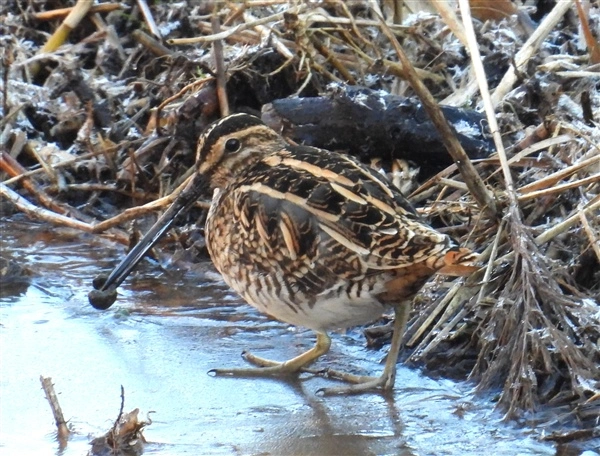
Woodcocks were at 4 sites with a maximum of 2 at Fawley and Stokenchurch. There was only one Jack Snipe report, at Gallows Bridge on 6th. Snipe were thin on the ground yet again: the highest count of the month came from Aylesbury STW (30), compared to 75 last year. There were another 6 double-figure counts, but as national figures reflect, this is a species on the decline.
A Common Sandpiper, overwintering at Dorney Common, was noted on 2nd and is probably the same bird from last winter there. Green Sandpipers were recorded at six sites.
The highest Black-headed Gull count of the month came from Calvert, with c.4000 birds coming into roost there. Mediterranean Gulls were reported at three sites: Bletchley, Little Marlow GP, and Willen. The Bletchley bird was the returning, colour ringed “AY.ZY” individual of German origin, which has spent many a winter in that part of the county. Meanwhile, Common Gulls were a bit thin on the ground, with 454 in the Calvert roost being this species’ peak count.
The highest total of Lesser Black-backed Gulls - approximately 2000 - came from where else but the Calvert roost. However, aside from this mega total, large flocks of LBBGs were hard to find with just 56 being the next biggest count at Foxcote Res. Little Marlow GP hosted the largest total of Great Black-backed Gulls (51), whilst a high of approx. 300 Herring Gulls roosted at Calvert.
Onto our rarer gulls and Calvert and Little Marlow GP were the only sites to log Yellow-legged and Caspian Gulls during the month. The peak counts for both species came from Calvert (10 YLGs and 4 Caspians), whilst Little Marlow GP hosted one of each.
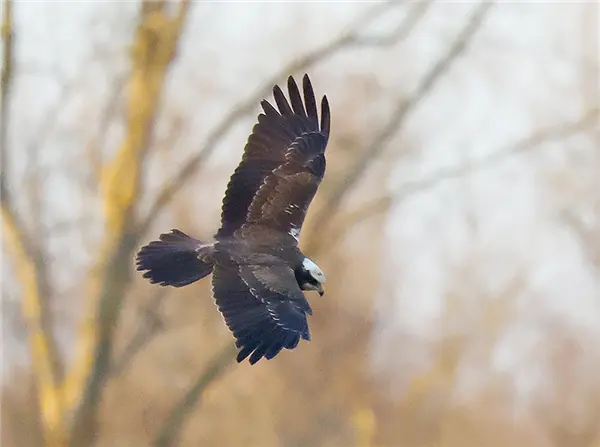
Marsh Harriers were seen at Gayhurst, Tove Valley, Foxcote Res and Linford, with 3 separate individuals noted at the latter site over the course of the month. Merlins were seen at Gallows Bridge on 6th, Tove Valley on 11th, Hyde Lane on 22nd, and Stowe on 27th.
A Short-eared Owl appeared at dusk on 10th on the outskirts of Milton Keynes. Sadly this previously reliable site for this species is being developed. Goodbye owls.
Stonechats were found at 16 sites over the course of the month. Amersham recorded the highest count (6), whilst elsewhere most sites recorded ones and twos. Overall, numbers of Meadow Pipit were low, the highest total being a paltry 20 at Amersham Flood Meadows.
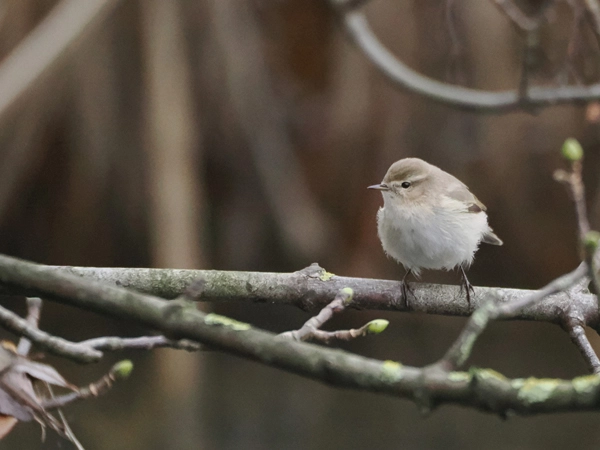
The last few winters have produced a Siberian Chiffchaff or two and 2025/26 was to be no exception as this sub-species was reported from both Tattenhoe and Furzton, thanks to one dedicated observer. At Tattenhoe, an individual first found on 4th was soon joined by a second on 8th. Amazingly, a third individual was located on 22nd, with two birds remaining at the site until the year’s end. Meanwhile, at Furzton, a single seen on two separate dates (13th & 15th) was thought to be a different bird from the Tattenhoe individuals.
Mid-winter is the prime time of year for Starling murmurations, and good numbers were to be found at Fleet Marston and Marlow Low Grounds, which recorded flocks of 4000 and 3000 birds respectively. Elsewhere, Linford, Tove Valley, Botolph Claydon, and Calvert all recorded flocks of at least 500+. Compared to 2024 this is an encouraging step up in numbers.
Reports of Linnets were on the low side. Nevertheless, there were still some large flocks around: Weedon (800), Ashley Green (200) and Tattenhoe Park (128) all logged counts totalling three figures.
The two biggest Chaffinch flocks recorded were 300 at Flackwell Heath and 100 at Ashley Green, but these were the only three figure totals. Once again, Brambling were hard to come by with records coming from only 14 sites and the highest count being just 7.
New Bradwell was the only site to record Hawfinch, with a single on 14th.
We’ve been ending these reports with Crossbills for quite a while now. And it’s great to see that trend showing no sign of ending. The big influx back in 2025 really has left us with far more birds than we’re used to seeing. In December, birds were seen at the following sites:
- Aston Hill: 6 on 2nd
- Buttermilk Woods: 5 on 3rd
- Rammamere Heath: 3 on 3rd
- Stoke Goldington: 7 on 3rd
- Rushmere Park: 20 on 7th, 15 on 21st
- Baldwin’s Wood: 10 on 7th
- Sarratt Bottom: 11 on 8th
- Chenies: 15 on 19th, 32 on 23rd
- Tilehouse Wood: 8 on 20th
- Great Hampden: 9 on 22nd
- Little Chalfont: 10 on 23rd
- Stoke Common: 11 on 27th
- Great Brickhill: 11 on 30th
- Dipple Wood: 20 on 30th
- Ashridge: 5 on 31st
Traditionally an early breeder, they are a species to keep an eye out for over the coming months, especially at sites with suitable habitat.