
A mere glance at the all the birder’s posts on Bluesky have revealed the same story - a very poor Spring for migrants. Yes there’s been the odd rarity but the bread-and-butter birds, those species which give us a little lift whenever we see them grace our local patches, have been very low in number. And this tale of worry has been repeated in all corners of England. Time will tell whether this Spring has been an anomaly or an indicator of the new normal, thanks to biodiversity collapse. But Bucks certainly wasn’t immune.
Still, April is probably the most dynamic month of the year with its intoxicating mix of summer migrants arriving en masse, the last of the lingering winterers hanging around, plus a high chance of a decent rarity – and our headline bird was as good as it gets. But there were also some notable gaps. Many species were reduced in number compared to recent years and were very hard to find.
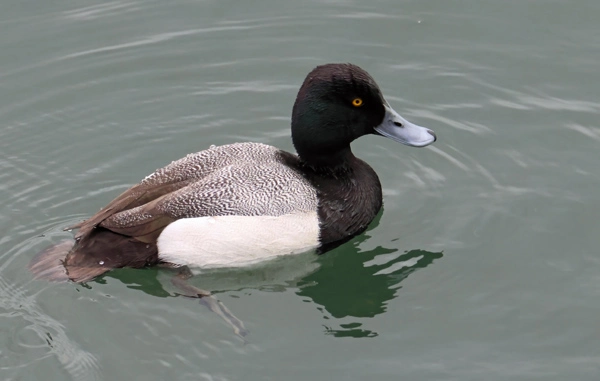
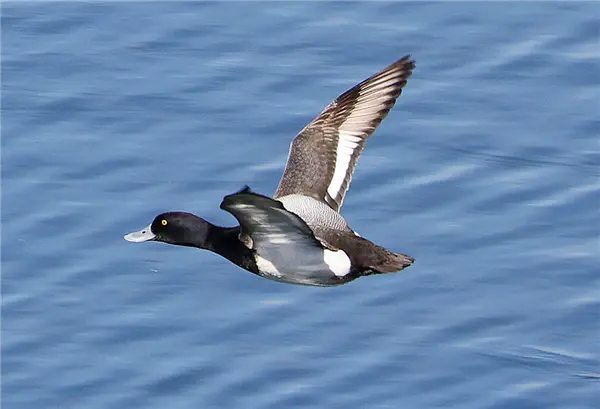
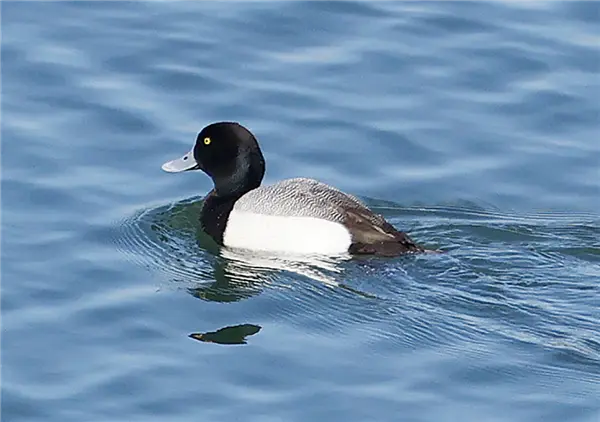
There’s only one place to start - with the male Lesser Scaup at College Lake from the 2nd, the first ever in Bucks. For a long time following the first UK record - the legendary Chasewater bird in 1987 – this North American duck was a five-star rarity. It has since become a more regular visitor, but we’ve had to wait a while for one to appear within our borders. There have been a few false alarms involving hybrids, but it quickly became apparent that this individual was the real deal.
Early Spring may seem like an odd time for rare transatlantic wildfowl to turn up – rather than in the depths of winter as one would expect – but it’s actually quite typical. Vagrants latch on to flocks of commoner species returning north. And whilst the initial rush to see it was understandable (such birds don’t usually hang around), in hindsight it proved unnecessary.
Our male very quickly became attached to a female Tufted Duck, which no doubt accounts for his remarkable lasting over three months, well into the early summer.
Other wildfowl can be dealt with very quickly. A male Garganey at FFNR on 4th was the only one of the month – this delightful duck has recently become very scarce in Bucks, with only three birds since September 2024.
A female/immature Common Scoter was at Calvert on 4th, and a pair of Red-crested Pochards at New Denham on the same day. April also saw a late wintering Goldeneye, a male at Willen who lingered until 21st.
A Hoopoe was at a private site in mid-Bucks on 24th. It’s already five years since our last twitchable Hoopoes, at Willen and Hedgerley. If one had the decency to linger in an accessible location it would undoubtedly draw crowds.
April is usually the month when wader passage gathers pace, but I’m afraid the return for this year was very poor. No godwits, no Ruff, no Sanderling, and not even a Wood Sandpiper, despite it being an excellent Spring nationwide for the latter species. There will be all sorts of factors feeding into this, but most immediate to us is quite simply the almost total lack of suitable habitat. Many of our wetland sites just don’t have the muddy edges or the wet fields.
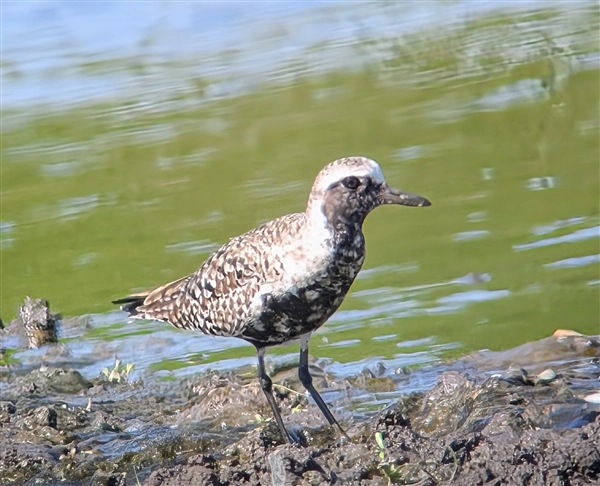
A Grey Plover at Dorney Common on 23rd was the pick of the bunch. Greenshanks were seen at Little Marlow GP (2 on 22nd & 28th, 1 on 30th), Foxcote (1 on 24th), and Willen (1 on 28th). There were just three Ringed Plovers, at Foxcote on 7th, Calvert on 20th, and Drayton Beauchamp on 24th.
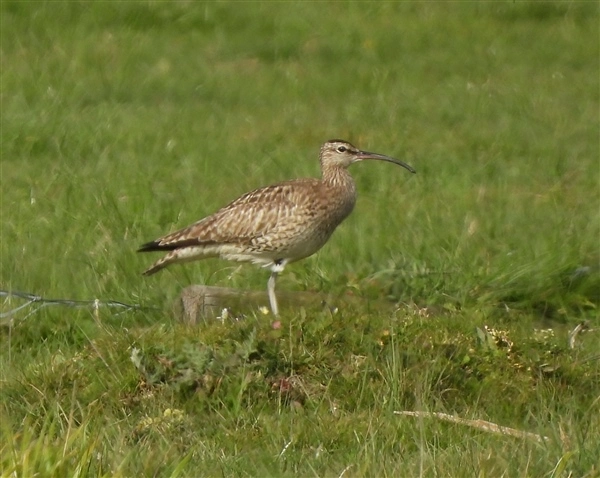
A few Whimbrel turned up, with singles at Little Marlow GP on 22nd and 29th, and Ivinghoe Beacon on 25th. There were two at Pitstone Hill on 23rd and Upper Ray Meadows on 26th.
Just one passage Redshank was seen – at Newton Leys on 2nd – but birds had settled into territories at both Gallows Bridge and College Lake. Territorial Curlews were also reported from Shabbington, Gallows Bridge, and Upper Ray Meadows. These wonderful birds cling on in Bucks - just.
Five sites held breeding Lapwing, with success being proven at College Lake and Gallows Bridge. Little Ringed Plovers were seen at 13 sites, which is pretty healthy, and territorial behaviour was seen at four of those sites.
Two Golden Plover at Grove on 1st were the last of the winter, as was the Jack Snipe at Amersham Flood Meadows on 16th. There were two good counts of Common Sandpiper (8 at Furzton and 15 at Little Marlow GP) but numbers of this species seemed a touch below average this year. Little Marlow GP also hosted a good count of 15 Green Sandpipers on 23rd.
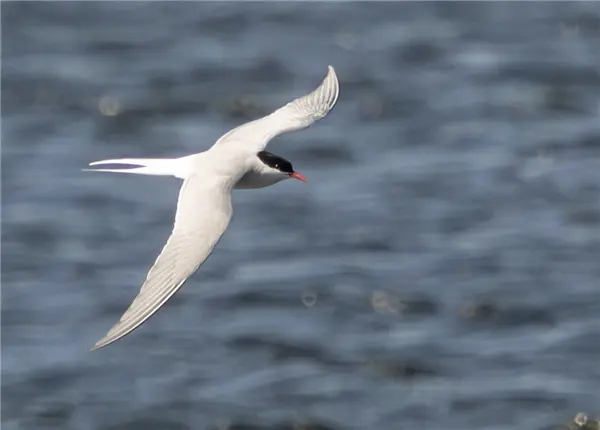
Our first Common Terns all arrived on 10th, with birds being seen at Little Marlow GP, Foxcote, and College Lake. Arctic Tern passage was underwhelming, kicking off with one at Marsworth on 25th, then separate flocks of 8 and 5 at Foxcote on 28th, a single at Caldecotte on the same day, and finally one at Little Marlow GP on 30th.
Black Terns were also scarce, with just 4 at Foxcote on 24th and 1 at Little Marlow GP on 24th-25th. The 24th was obviously one of those days, as the south-east winds also brought a few Little Gulls, with 6 at Foxcote and one at College Lake.
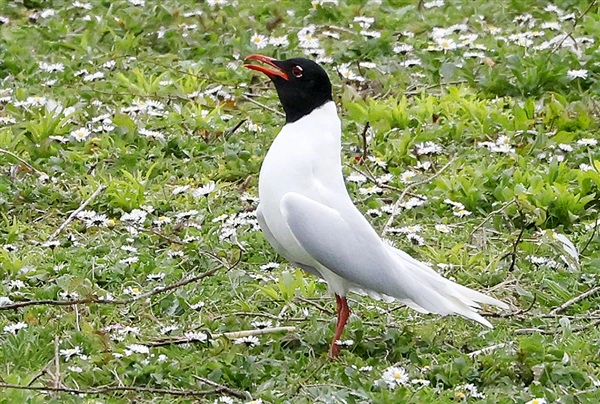
There were just single reports of our other three most regular scarce gulls, with an adult Mediterranean Gull at College Lake on 3rd, an adult Yellow-legged Gull at Rowsham on 15th, and a first-summer (2CY) Caspian Gull at Foxcote on 30th.
During April some rather remarkable news began to emerge from Linford. The lingering adult Bittern seen in March was still being seen, and even better, being heard booming. Let that sink in for a moment – a booming Bittern in Bucks! Two birds were seen on the 16th, and occasional dates subsequently, with all the indications being that these two were a pair, and a breeding attempt was very much on the cards.
The habitat at Linford has changed in the 35 years I’ve been going there. The gravel, mud and pools on the bund, and along some of the lake edges, are long gone and in their place are now reedbeds and some willow scrub. And although I personally mourn the loss of passage and breeding waders, it’s these very reedbeds that have attracted the Bitterns, and most welcome they are too. The fact that Linford is a permit only site and relatively undisturbed must also have contributed to their prolonged stay.
Cattle Egrets are now a regular feature of these reports, and singles at Rowsham on 2nd, College Lake on 4th & 16th, and Little Marlow GP on many dates from 15th, plus another 3 at Tongwell on 10th, is a decent Spring return.
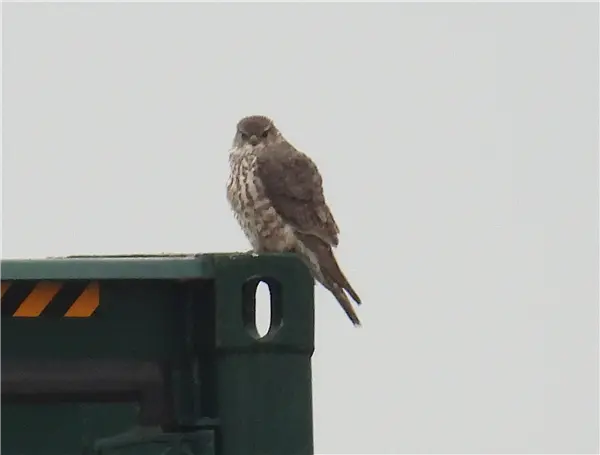
Two Merlins – a male at Flackwell Heath on 7th and a female/imm at Rowsham on 21st – were a reminder of the winter just gone. Only one Osprey was seen, at Amersham on 16th, which is very sub-standard.
Somewhat unexpectedly, given how used to them we became over the winter, Marsh Harrier records declined considerably, with only an immature at Gallows Bridge on 14th and a 3CY male at Foxcote on several dates after the 22nd troubling the scorers.
There was an above average April return for that most dynamic of raptors, Hobby. The first bird was at Gallows Bridge on the early date of 17th, and reports were received from 7 other sites before the month was out, with 2 at Iver on 25th.
Lesser Spotted Woodpeckers were seen at three different sites in the Burnham Beeches complex, with breeding proved at one of these sites, and a territory confirmed at another. Our first returning Cuckoos were seen at Linford and Willen on 16th, and then subsequently reported from 15 sites (mostly in the north), which is an excellent total so early in the year.
The first Swift was at Willen on 10th (another early record), but by the end of the month numbers were still pretty low. The only double-figure flocks seen were at Willen (30 birds), Little Marlow GP (20), and Weston Turville (10).
It’s been a while since I could include Nightingale in these bulletins, so it’s a pleasure to report two birds, one at Tongwell on 8th and one at Little Marlow GP on 25th. These are our first records for two years. Back in 2024, April saw several singing birds but none stayed on to breed. And it looks like these two were also passage migrants. I’m holding out hope that in a thick, scrubby, unwatched corner of our county, Nightingales still sing in the darkness.
Two Woodlarks, at Grangelands on 6th and Whiteleaf on 28th, were also passage migrants. In keeping with recent years Tree Pipits were at a premium, with just two birds seen, at Rowsham on 15th and Steps Hill on 30th. There was better news about Meadow Pipits, with evidence of multiple pairs breeding at three traditional sites.
There was a decent run of Ring Ouzels at Ivinghoe Beacon, starting with 2 on 6th and quickly building to at least 9 on 10th, with 5 remaining until 13th, and an additional 3 on 24th. Several of these birds showed superbly well. Additional birds were at Steps Hill on 1st and 9th, and Quainton Hills, also on 9th.
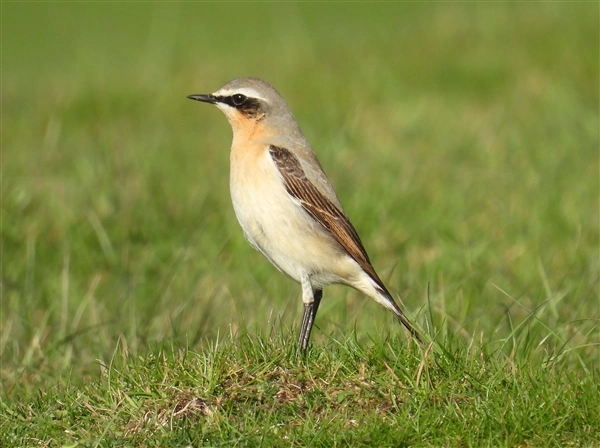
Before I wrote this month’s report I felt that Wheatear numbers were a little down this year – they were certainly very scarce up north. But 73 reports in April from 23 sites is a respectable return. As expected Ivinghoe Beacon was the best place to see them, with a peak count of 22. There were no other double-figure counts, but there were 7 at Amersham Flood Meadows, and 6 at both Emmetts Field & Quainton Hill.
There were 8 reports of Whinchat, all singles apart from 2 at Emmetts Field on 24th. In contrast to Wheatear, there was a northerly bias to records, with a male at Olney being particularly popular. Sadly there were only four reports of Redstart, with singles at Ivinghoe Beacon on 9th-10th, Bledlow on 10th, Ravenstone STW on 11th, and 4 at Eythrope on 12th. This is really poor. Let’s hope that our autumn return is better than Spring.
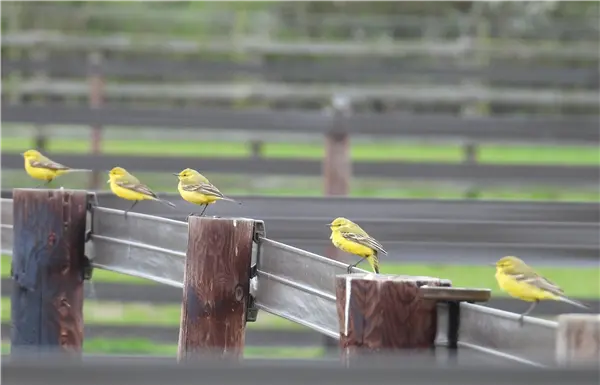
Another red-listed species which enjoyed a good April was the always delightful Yellow Wagtail (come on, there are few birds which embody the adjective “dazzling” like a Spring male Yellow Wag). There were 56 reports from 23 sites, with double-figure counts at Aylesbury STW (16), Rowsham (14), Olney (14), and Marsworth (11).
Finishing off the more notable summer migrants, Grasshopper Warblers were heard and/or seen at Arncott MOD, Leckhampstead Wood, Linford, Hyde Lane, Wolverton, and Olney. At least three of those sites are traditional breeding grounds – fingers crossed the same applies in 2026.
Bad weather in April usually pushes down a few hirundine flocks to our waterbodies. Sizeable counts of Sand Martin were 250 at Little Marlow GP and 130 at Foxcote; Swallows weren’t quite so numerous, the top counts being 100 at Little Marlow GP and 70 at Foxcote; and finally there were 100 House Martins at Little Marlow GP and 30 at Willen.
Finishing with finches, just four reports of Brambling in April, with the last one on 12th, rounded off a poor winter for this species. Crossbills were reported from Whiteleaf and Rushmere Park, with 11 at the latter site. There were a very healthy 31 reports of Redpoll in April, including excellent counts of 100 at Little Hampden, 50 at Rushmere Park, and 30 at Buttermilk Wood. There were fewer Siskin around, with 50 still at Rushmere Park the only notable flock.