
Fulmer
Location
OS grid ref.
Google maps
what3words
Getting there
Parking
Train
Bus
Access
Permit required?
None of the footpaths at Fulmer are concreted - thus they are quite uneven and can be impassable without a pair of wellingtons after periods of heavy rain or in winter.
As mentioned previously, the main public footpath runs between Hay Lane to the east and Dukes Valley to the west. There are two more footpaths which branch off this main path. The first will take you south-west, past the patch of scrub and the remnants of Pickeridge Quarry to Stoke Common Road. The second leads west, taking you past Fulmer Pit and through more horse paddocks to Windsor Road.
On site facilities
Local amenities
There are no toilets on site. However, there are adequate facilities in nearby Gerrards Cross and Stoke Poges. Please check opening times before visiting.
There are two pubs nearby: The Black Horse in Fulmer village and The Apple Tree at the top of Fulmer Rd. A range of shops and cafes can also be found in nearby Gerrards Cross or Stoke Poges. Please check opening times before visiting.
Target species
Site description
Fulmer, a quaint little village, is located just south of Gerrards Cross in the south-east corner of Buckinghamshire.
The site itself lies to the north-west of Fulmer and can be viewed from a public footpath bordered by woodland, which runs between Hay Lane and Dukes Valley. It mostly lies on private land and comprises a varied range of habitats.
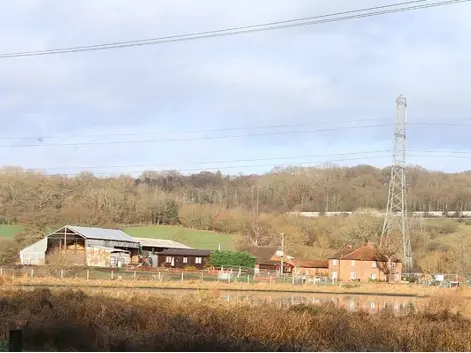
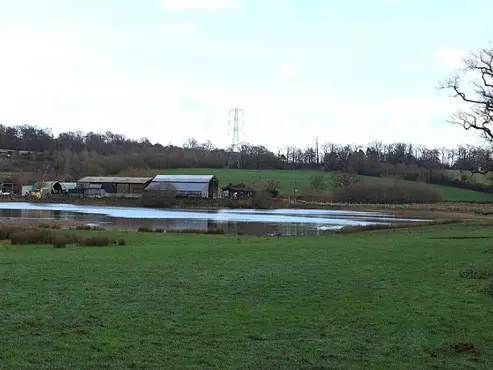
Setting off from Hay Lane, just off the start of the public footpath, there is the Low Farm Flood Meadow. This is often flooded in winter and behind it lies several large fields.
Following the footpath westwards, you will arrive at a set of four lakes surrounding Low Farm farmhouse that make up Fulmer Marsh. Only three of these lakes are visible from the footpath. These former pits were dug out in the early 1970s due to a need for gravel to build the M40 nearby.
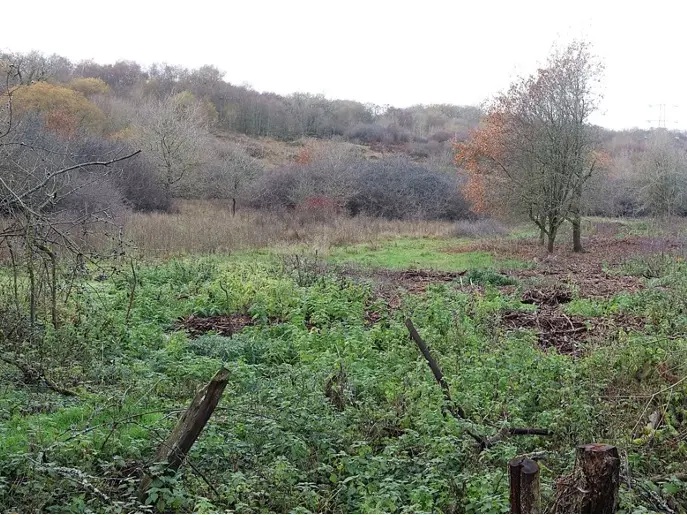
Continuing westwards, you will come to a fork in the path. The left-hand footpath will take you up the hill - past a promising patch of scrub on your right - to the now eerily abandoned Pickeridge Quarry, formerly a landfill site.
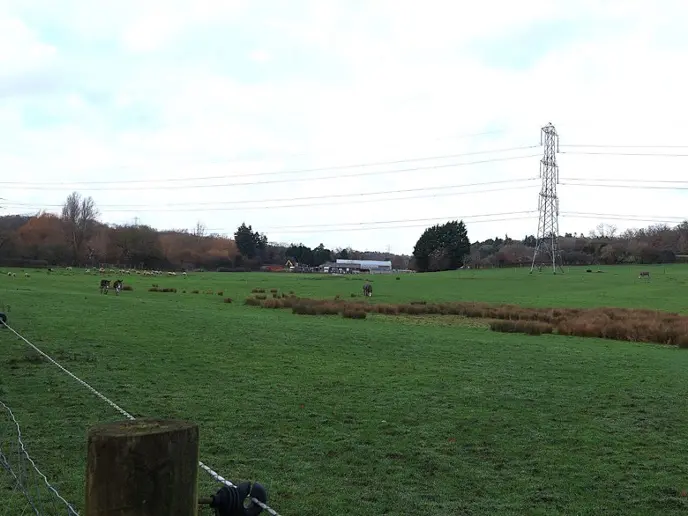
Meanwhile, the right-hand footpath will bring you out by several large horse paddocks stretching from Fulmer Marsh towards Dukes Valley. Lying opposite these paddocks is Fulmer Pit. Accessed by a separate footpath, only a small part of it is viewable.
Much clearance and drainage work was carried out at the site during the summer of 2025, enhancing the view of the west side of Fulmer Marsh and creating suitable habitat for passage waders.
Species
Fulmer is worth a visit at any time of year, but it is generally at its best during passage migration in spring and autumn. Over 120 bird species have been recorded at the site.
It is one of the most reliable sites in the county for Little Grebes, with most sightings coming from Fulmer Pit. A Great White Egret has been spotted in four of the last five winters. A flyover White Stork - from the Knepp Reintroduction Scheme - and a Pink-footed Goose have also been recorded at the site in recent years.
There are often good numbers of both Canada and Egyptian Geese in the horse paddocks as well as flocks of Wigeon, Teal, Mallard, Shoveler, Gadwall, and Tufted Duck. Feeding Hobbies are a common sight during the summer months and Peregrines make an occasional visit. High counts of Coots and Moorhen are often noted.
Little Ringed Plovers, Lapwings, Green Sandpipers and Common Sandpipers often make an appearance during passage migration. Oystercatcher, Dunlin, Greenshank and Black-tailed Godwit have also been seen in the past. Snipe is commonly seen during winter on the flood meadow.
A Little Owl is commonly seen around the farmhouse. Lesser Spotted Woodpecker has been recorded in the woodland bordering the public footpath in the past and there are usually decent numbers of passerines during spring and autumn. Yellow Wagtails can be found in the horse paddocks during passage migration. Redstarts, Whinchats, Wheatears and Stonechats make the occasional visit as have the odd Cetti, Sedge and Reed Warbler.
Blackcap, Garden Warbler, Whitethroat, Lesser Whitethroat, Chiffchaff and Willow Warbler have all been recorded in spring from the patch of scrub mentioned previously. There have also been a few sightings of Spotted Flycatcher in years gone by.
Last winter, there was a big Magpie and Jackdaw roost at Fulmer Pit. Brambling and Redpoll have also been noted in recent years as have the odd Bullfinch and Reed Bunting.